

Get Out is Your Monthly Guide to What’s Great in the Great Outdoors.
When the pandemic locked us all down in mid-March of 2020, I, like many other people, decided to up my gardening game. It was either that or learn how to make sourdough bread, and my kitchen already had enough going on. So, it made sense to move additional hobby operations outdoors.
It started small, with cucumbers, peppers, marigolds, and zinnias—all in pots on the porch. What happened next is best described in the words of Ron Burgundy: “Boy, that escalated quickly.” The following year I sectioned off part of my front lawn, and, the year after, I targeted another portion of lawn beside the driveway where I planted deer-resistant perennials. (Spoiler Alert: they were not deer resistant.) I also fenced off another area for a fruit garden.
It was exciting to watch my yarden dreams slowly materialize. Trust me, though, over the years, there have been many times when my mouth wrote a check that the other end couldn’t cash. I have hired help, reluctantly abandoned half-baked schemes, and watched in helpless dismay as Mother Nature dashed my efforts.
While I don’t seem to reside mentally in a space that understands what is and what is not reasonable, I do occasionally learn. Most important is this: Whether your garden is a couple of planters on the patio or ever-expanding pandemonium, getting outdoors to tend to it is incredibly good for the body, mind, and spirit.
I belong to a few local gardening groups and a neighborhood Buy Nothing group where I get a lot of free and cheap supplies and trades. Few things send off warning bells in the Mister more than my announcing that I am taking the van somewhere to pick up something. Inevitably, he’ll be helping upload bricks (or re-loading and unloading bricks in a different spot), heaving some large object, or digging a three-foot-deep hole… there. Nope, there. Wait, there is better.
Marital exasperation aside, being into gardening is a great way to meet people and build mutual relationships—in addition to the other aforementioned benefits. That’s how I came across Kind Hearts Bloom, a Grand Rapids-based nonprofit organization focused on connecting neighbors and promoting mental health through gardening.
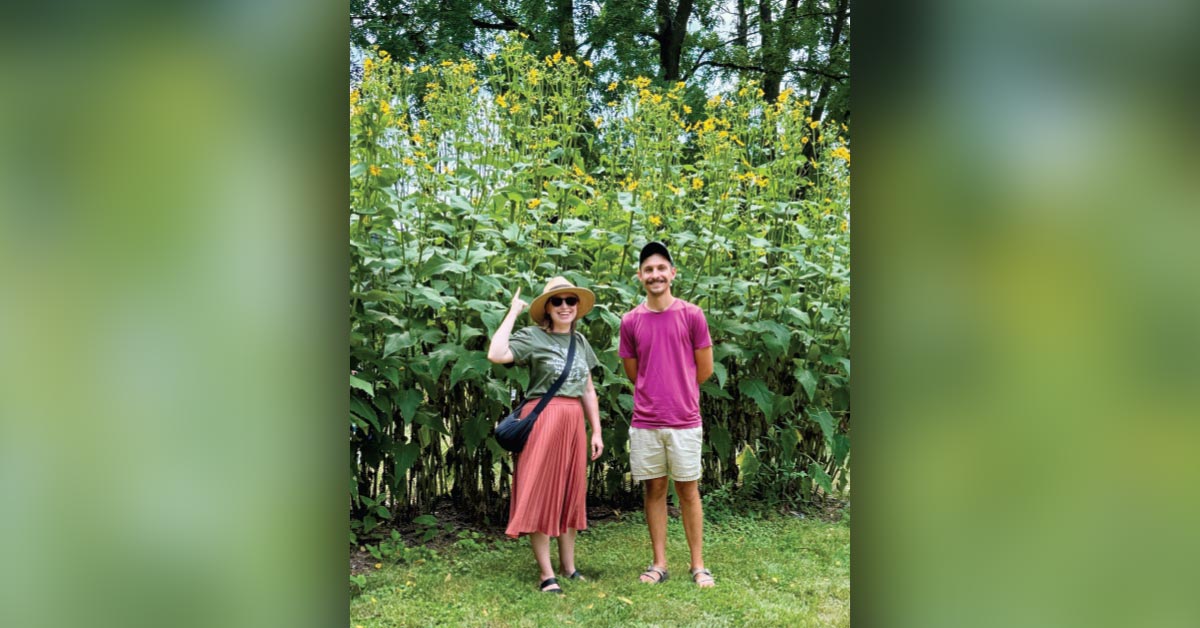
Here’s where I’m going to switch gears and plug in some advice from their team. Revue readers, meet Kristen, the Founder, and Corey, the Program Lead for the Community Roots Gardens program.
What do you think prevents people from getting into gardening? What could change that?
Corey: It can be really overwhelming to know exactly where and how to start. On social media we see these huge, sprawling vegetable and flower gardens, but there are often not many great examples of compact, manageable garden spaces. A single raised bed or an assortment of pots in a sunny location can provide significant gardening opportunities.
Your programs put an emphasis on native, pollinator-friendly plants. What are the benefits?
Corey: Great question! Native plants provide crucial food and shelter, with many of our native insect and wildlife species relying on specific plants. A great example is the Monarch Butterfly. Its caterpillar feeds exclusively on native milkweed plants. Without milkweed present in the environment, Monarchs would vanish!
Native plants also require significantly less water, fertilizer, and pesticides than a traditional lawn or garden. And, they have the ability to reduce erosion, build soil health, sequester carbon, and reduce air pollution!
What is the best piece of advice you have for new gardeners?
Corey: 1) Don’t wait, just go for it! 2) Start small! It’s not only cost effective, it also allows you to slowly build your confidence as you begin your gardening journey.
Kristen: I always tell folks, “You will kill plants.” Every successful gardener has a kill-count. Don’t lose your enthusiasm if a plant doesn’t thrive under your care—you’re learning!
How does gardening promote community interaction?
Kristen: Using gardening as a way to build community and foster relationships between neighbors was the inspiration behind my founding of Kind Hearts Bloom. Gardening, especially front-yard gardens, offer easy, natural opportunities to meet your neighbors and connect with others who care about your community. I learned this firsthand when I converted my front yard from grass to garden after moving to Grand Rapids in 2023.
What programs do you offer and what can we look forward to this season?
Corey: This year we’re launching our Community Roots Gardens! We’ll be partnering with twelve homeowners to replace their traditional lawns with native plants, food gardens, or a mix of both. Participants join a two-year program that includes garden designs, plants, education, and community workdays. Our goal is to create visible, welcoming gardens that will inspire and beautify neighborhoods.
In addition is our Grow & Give program, a self-guided resource that offers simple guides, practical resources, and real-world examples to make gardening feel approachable and meaningful.
Kristen: We also have a full volunteer schedule on our website. Not only will you learn something new when volunteering, you’ll meet some pretty amazing people too!
If all of this interests you, head to kindheartsbloom.org to get involved.
You can also follow them at facebook.com/kindheartsbloom or instagram.com/kindheartsbloom.
