

With her debut solo album Destroy Everything (due out Oct. 3), singer-songwriter Emilee Petersmark embraces her Korean identity, confronts illness and self-doubt, and discovers that sometimes breaking everything apart is the only way to become whole.
Over the last 15 years, Petersmark helped transform Grand Rapids indie-folk favorites The Crane Wives from a beloved West Michigan band into one of the country’s most successful independent acts. Alongside the band, she’s played sold-out theaters across North America and Europe, co-written five studio albums, racked up millions of streams, and helped cultivate a devoted fanbase that continues to grow.
But behind those tours, rehearsals, and recording sessions, another collection of her own songs quietly waited.
Some had existed for more than a decade. Others emerged during one of the most uncertain periods of Petersmark’s life, the pandemic, when the future of music—and her place within it—felt anything but guaranteed.
Together, they became Destroy Everything, the deeply personal debut album from her new solo identity, Lee Emi.
Born Lee Sang-Eun in South Korea before being adopted and raised in Michigan, Petersmark spent much of her life known by the name she received after adoption.
Choosing Lee Emi for her solo work—a blend of her Korean surname and the name she’s carried for decades—served as something of a symbolic step toward embracing every part of herself.
“I feel like there is a lot of conversation about what adoption trauma looks like now that most adoptees are entering this adulthood stage,” Petersmark told Revue. “There were 250,000 babies adopted from Korea between the ‘50s and today. That’s like the population size of Grand Rapids.
“Most of those adoptees are grown-ups, and we finally have the language and the autonomy to start talking about our experience,” she continued. “So there has been a big reckoning within the adoptee community. And I feel like I’ve spent a lot of time since going back to Korea for the first time to try and like dig into what it means to be part of that diaspora, what it means to try to reclaim pieces of that as somebody who was raised in Michigan without a strong connection to a culturally Korean space.”
Rather than rejecting the Americana influences of her success with The Crane Wives and making a full departure from everything she’s built so far, Petersmark said the solo project acted as a way to burn down what wasn’t serving her anymore, and build a better, more balanced version that welcomes the Eastern and Western sides of herself.
“I think that there’s probably a lot of people who would push back on this idea that I feel like an immigrant in a lot of ways because I was raised here,” Petersmark said. “But I think that it’s hard to be separated from your culture, and it’s hard to embrace something that you feel like doesn’t belong to you. But I’m working really hard to try to make it more public that there are different ways to exist in these multiple identities, which I feel like that has not been something that’s been demonstrated to me growing up. And it’s exciting and terrifying to try to embody it now.”
Written over several years, Destroy Everything is an album that explores her heritage, yet is also marked by isolation, and Petersmark’s diagnosis of a rare kidney disease, which is thankfully now in remission.
“There was a period of time in, I think 2013 to 2019, where I was really just very inspired and writing a ton of music,” Petersmark said. “And most of those songs just went into a Google Drive graveyard where they sat for years.”
When the pandemic forced The Crane Wives off the road, those forgotten songs finally found new life. As the band considered slowing its relentless touring schedule, Petersmark briefly wondered whether music would remain part of her future at all. She picked up another job, contemplated life beyond performing, and quietly recorded what would become her solo debut with Crane Wives bassist Ben Zito at Centennial Sound.
The album was completed, then shelved for five years.
“I do think that sometimes when I write music, it’s for a future version of me that I haven’t connected with yet,” she said. “Sometimes I feel like I write songs that, with new context and new life experience, take on a whole new life.”
That hindsight has become one of the album’s greatest strengths. Instead of preserving old emotions, Petersmark revisited them through the perspective of someone who had survived them.
The result is an album that embraces darkness without surrendering to it.
The album’s lead single, “Black Hole,” immediately signals that longtime Crane Wives fans shouldn’t expect a simple extension of her folk songwriting. It’s a crunchier, rockier track that Petersmark feels fits its confrontational tone.
“I feel like the message of ‘Black Hole’ is really what the whole record is about,” she said. “Underneath this anger and this desire for a satisfying quick change is this fear that we’re not changing because there’s something wrong with us, right? So, this is just kind of my little confessional, putting a lot of the worst fears out there out in front. If people resonate with this, I feel like they’ll resonate with the rest of the record.”
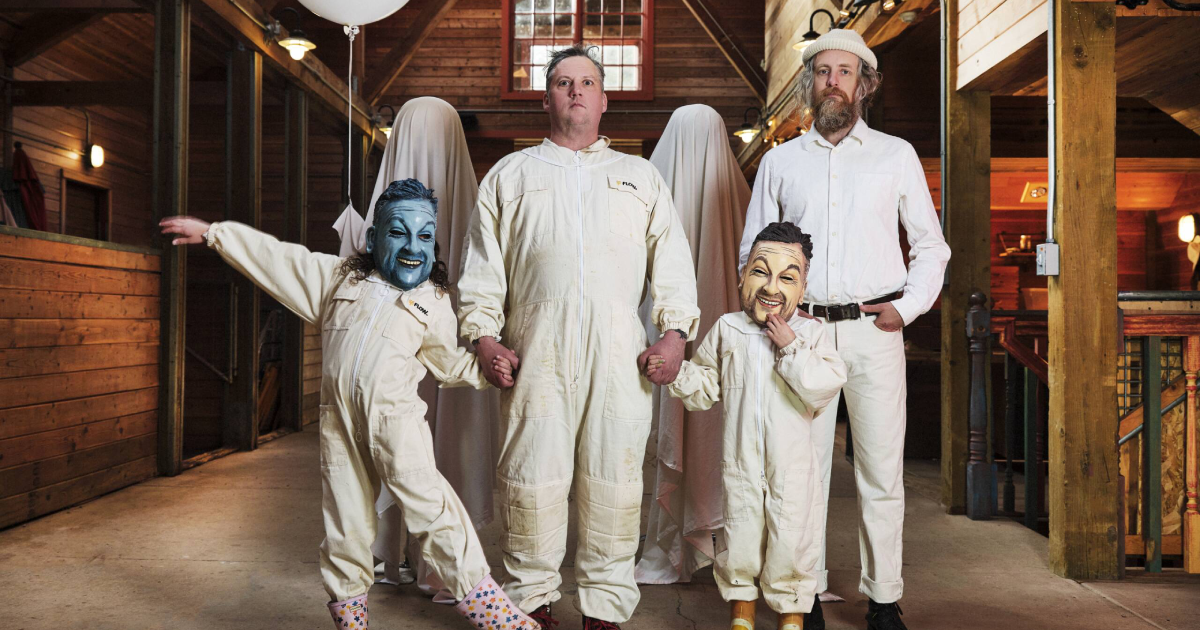
Ahead of the album’s release, Petersmark also released a video for the song “Clean Slate.” Shot on 16mm film and directed by second generation Korean immigrant filmmaker Hwa-Jeen Na, it incorporates traditional imagery, weaving Korean symbolism and identity into a meditation on cultural belonging.
“The video was such a labor of love,” she said. “It was really exciting to get different immigrant perspectives in this video,” Petersmark said. “We really wanted this to tell a story specifically from the Midwest Korean perspective, which seems very specific, but there are many of us. And it’s just this idea of chasing, or being chased by your culture, and by these ghosts of things that make up parts of who you are.”
As much as the album grapples with anger, grief, and isolation, its title ultimately points toward renewal, not ruin.
“The concept of Destroy Everything is not necessarily a desire to see something fall apart, but it is the desire to see something no longer exist the way that it is if it’s not serving you,” she said. “And as a messy person who makes a lot of mistakes, I think that what feels easiest, and what feels best, is something very quick and very violent and very instantaneous, like ripping down a poster, punching a hole in a wall, you know, like those sorts of things feel like instant change.
“And the reality is that in order to make change happen, it’s consistent commitment to it.”
Lee Emi
Destroy Everything Album Release
Wsg. Cal In Red
The Pyramid Scheme, 68 Commerce Ave. SW, Grand Rapids
Oct. 3, 7 p.m., $ 25 Advance, All Ages
leeemi.com, pyramidschemebar.com