
For Lindsay Lou, the past is never far behind. Michigan-born and Nashville-based, Lou’s music is deeply rooted in the people, places, and traditions that came before her—from her late grandmother to Michigan’s historic bluegrass scene.
Though no longer a Midwesterner, Lou remains closely connected to her roots in both motherhood and musicianship, drawing from the stories of powerful women and the musical traditions of her home state to write her own.
We chatted with Lou before her upcoming hometown show at The Big Room on October 3.
Why did you leave Michigan and move to Nashville in 2015?
Nashville is a really unique place. It's probably the only place in the world where 40% of the entire population that lives in the city is involved in the music industry in some way. I moved here in the same way someone moves to a Spanish speaking country to learn how to speak Spanish.
I had made music my life, and my livelihood, and my career. So it just made sense to go where many of the heroes, especially in the bluegrass world, live and are accessible at jams. There are jams constantly, everywhere, and gigs constantly, everywhere in Nashville.
How has living in Nashville influenced your community and creativity?
It’s ironic. Billy [Strings] moved here soon after I did, into a house across the street from me. We lived next door for several years. He mainly lives back in Michigan now, but he still makes his records here. Also ironically, the first song I co-wrote here in Nashville was with May Earlywine and Rachel Davis, who are my Michigan buddies.
It's funny that, because I live in Nashville, I now get to sing on my Michigan buddies’ records.
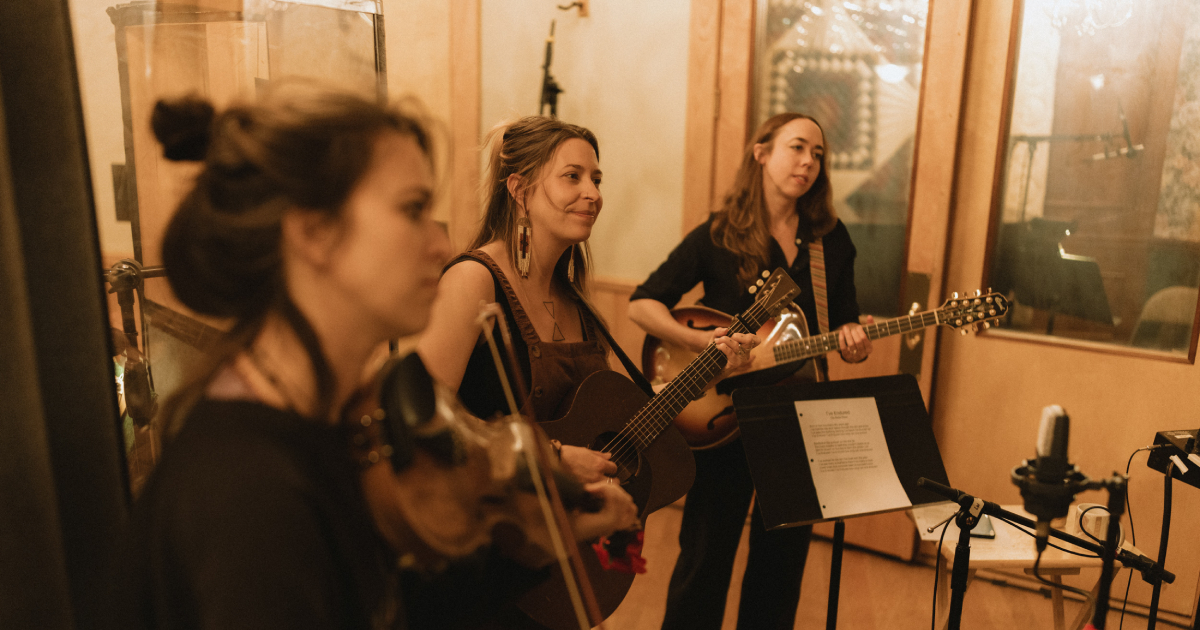
Your most recent record, Bluegrass Women, was recorded while you and your co-producer/engineer were pregnant. How did being on the verge of motherhood influence your creative partnership?
While I was pregnant, I was thinking about what sort of record to make, so I had it ready before this big transition hit. “Bluegrass Women” just felt like the perfect thing.
Something that's come up a lot is for all of us is that we've all been the only woman in the room at the jam, or in the session, or at the gig, at the soundcheck, and in the band, or whatever it is. So, to be all together, having shared that experience was cool. And to have another pregnant person really present with me for all of it just added to that feeling of empathy and understanding in a situation that is maybe not understood by everybody.
Speaking of not being understood by everybody, your grandmother had a big story of her own. Tell me more about her and her influence on your career?
My grandmother was a highly controversial woman, and a really remarkable one. Before she passed, I started collecting her life story and a series of hour-long conversations that I record once a week.
When my grandma got her college degree in the 60s, there were articles about her everywhere. She was a PR jackpot, and I hear my aunts and uncles still talk about how there was a barrage of reporters always coming at her to ask for interviews, because she was a woman with eight children who got her college degree and a job. That was a really big deal.
So I thought man, I can have one child and still be a small-time folk touring musician. I can do this. It seems impossible, but if my grandma could do that, then I can do it too.
What would you say to young musicians, especially to women artists, in Michigan today?
There is just such a rich music community in Michigan that is really special. I was lucky to have found it once I got to college. I just hope that everybody who has any leanings towards music, or community around music, or the tradition of music, will seek out these places. I hope they will seek out these communities, find them, and raise their children in them.
It's such a beautiful way to live.
Check out Lindsay’s music, merch and tour dates here.